For us, environmental and material-specific product compliance throughout the entire product life cycle is our top priority. Right from the development phase, we attach great value to reliably complying with all legal and regulatory requirements. In doing so, we not only keep an eye on the growing complexity of regulatory requirements, but also on technological change and the rising expectations of our customers and society. Our target: sustainable, legally compliant products that accept responsibility today and in the future.
Environmental Product Compliance Management (EPCM) represents a systematic and holistic management approach to ensuring the environmental and material compliance of products throughout their entire life cycle. We accept responsibility – not just in words, but through measurable actions.
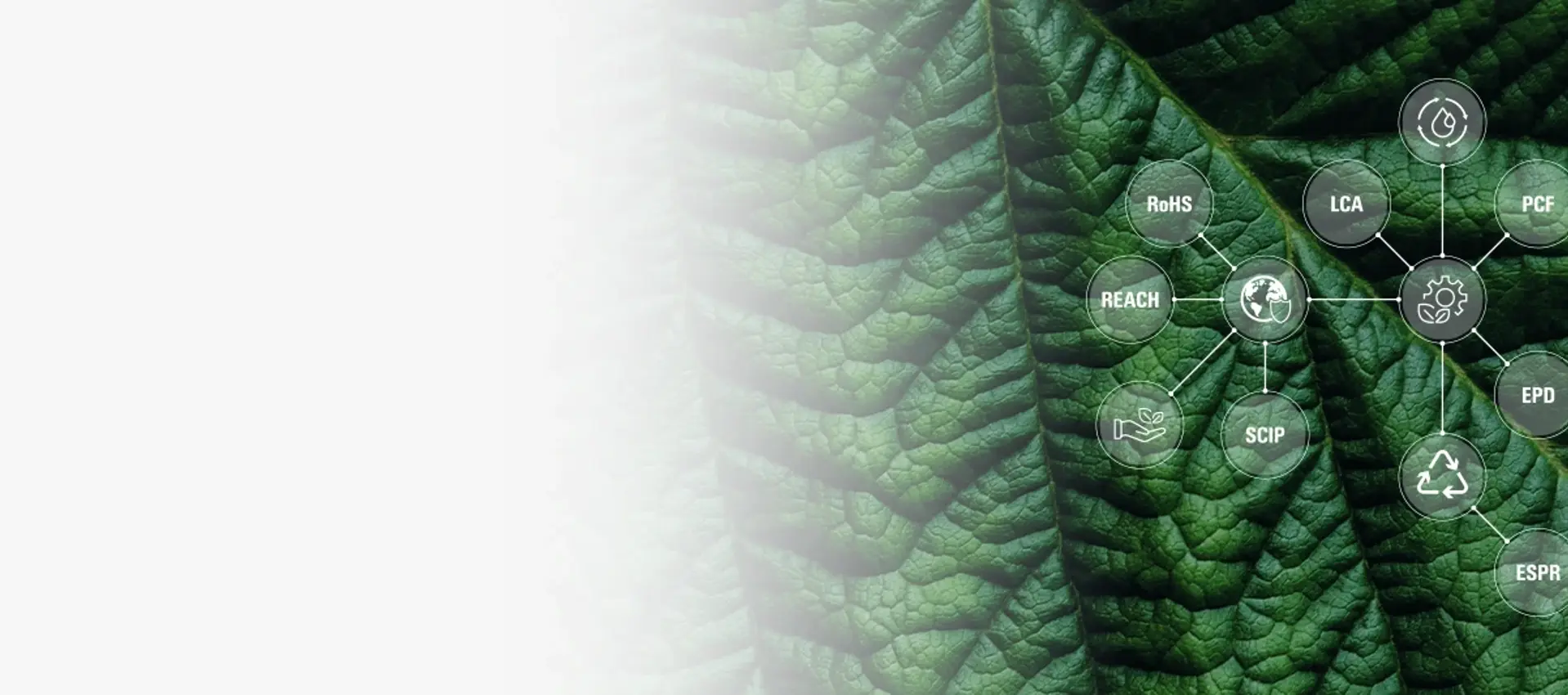
EPCM encompasses compliance with legal and regulatory requirements such as RoHS (Restriction of Hazardous Substances) and REACH (Registration, Evaluation, Approval and Restriction of Chemicals). In addition, we are focusing on future topics such as eco-design ( ) and circular value creation ( ).
Our target: products that are not only powerful, but also environmentally friendly, future-proof and legally compliant. Through consistent environmental product compliance management, we ensure that environmental aspects are integrated at an early stage in development, production and purchasing.
Why is EPCM important?
Because environmental and material compliance is more than just a legal requirement – it is a promise of quality and a contribution to global sustainability.
Enter item number - Download report.
Now you can access RoHS, REACH, SCIP and PCF data directly online – as PDF or XLSX files.
Quick, easy and directly online: Environmental product compliance
The RoHS Directive (Restriction of Hazardous Substances) regulates the restriction of certain hazardous substances in electrical and electronic equipment.
Restrictions apply to the use of lead, mercury, cadmium, hexavalent chromium, brominated flame retardants (PBB, PBDE) and certain phthalates (DEHP, BBP, DBP, DIBP), among other substances. The target is to effectively minimise environmental and health risks throughout the entire product life cycle. About the EU Directive
Information on REACH and RoHS compliance of our products can be found in the Weidmüller E-Shop Read more
The European chemicals regulation REACH (Registration, Evaluation, Authorisation and Restriction of Chemicals) regulates the handling of chemical substances along the supply chain. We accept responsibility for communication within the supply chain and ensure that all relevant requirements of Regulation (EC) No. 1907/2006 are met. The target is to identify and minimise risks to people and the environment at an early stage.
About the European Chemicals Agency
Information on REACH and RoHS compliance of our products can be found in the Weidmüller E-Shop Read more
The SCIP database (Substances of Concern In articles as such or in complex objects – Products) is used to record substances of very high concern (SVHC) in articles in accordance with the EU Waste Framework Directive. Industrial electrical and electronic equipment is also subject to this reporting obligation if it contains SVHCs in concentrations exceeding 0.1% by mass ( ). Weidmüller consistently fulfils this obligation and submits all relevant product information to the ECHA.
About the European Chemicals Agency
Conflict minerals such as tin, tantalum, tungsten and gold may originate from mining areas where they contribute to the financing of armed conflicts. Weidmüller fulfils its corporate duty of care and ensures that the raw materials used come from conflict-free sources through transparent processes in the supply chain. In doing so, we comply with the requirements of the EU Regulation and the Dodd-Frank Act. About the Responsible Minerals Initiative
Our target – making environmental impacts visible
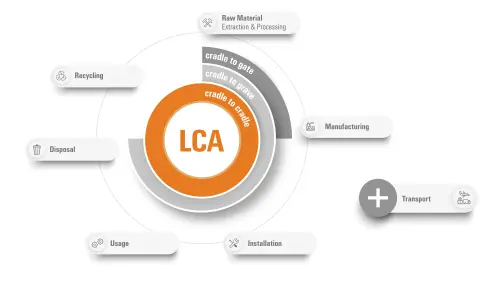
Whether EPD, PCF or LCA – all these terms stand for one thing: a holistic view of the environmental impact of a product throughout its entire life cycle. From raw material extraction to production and transport to use and disposal, we calculate various environmental indicators in the life cycle assessment (LCA), such as CO2 emissions in the form of the product carbon footprint (PCF), and provide them transparently in environmental product declarations (EPDs).
By the end of 2030, Weidmüller will have calculated a PCF for at least 80% of its products, measured in terms of turnover.
If you have any questions regarding environmental product compliance, please contact: green-compliance@weidmueller.com